
Stevedoring Safety: Load Center and Stability at High Tonnage
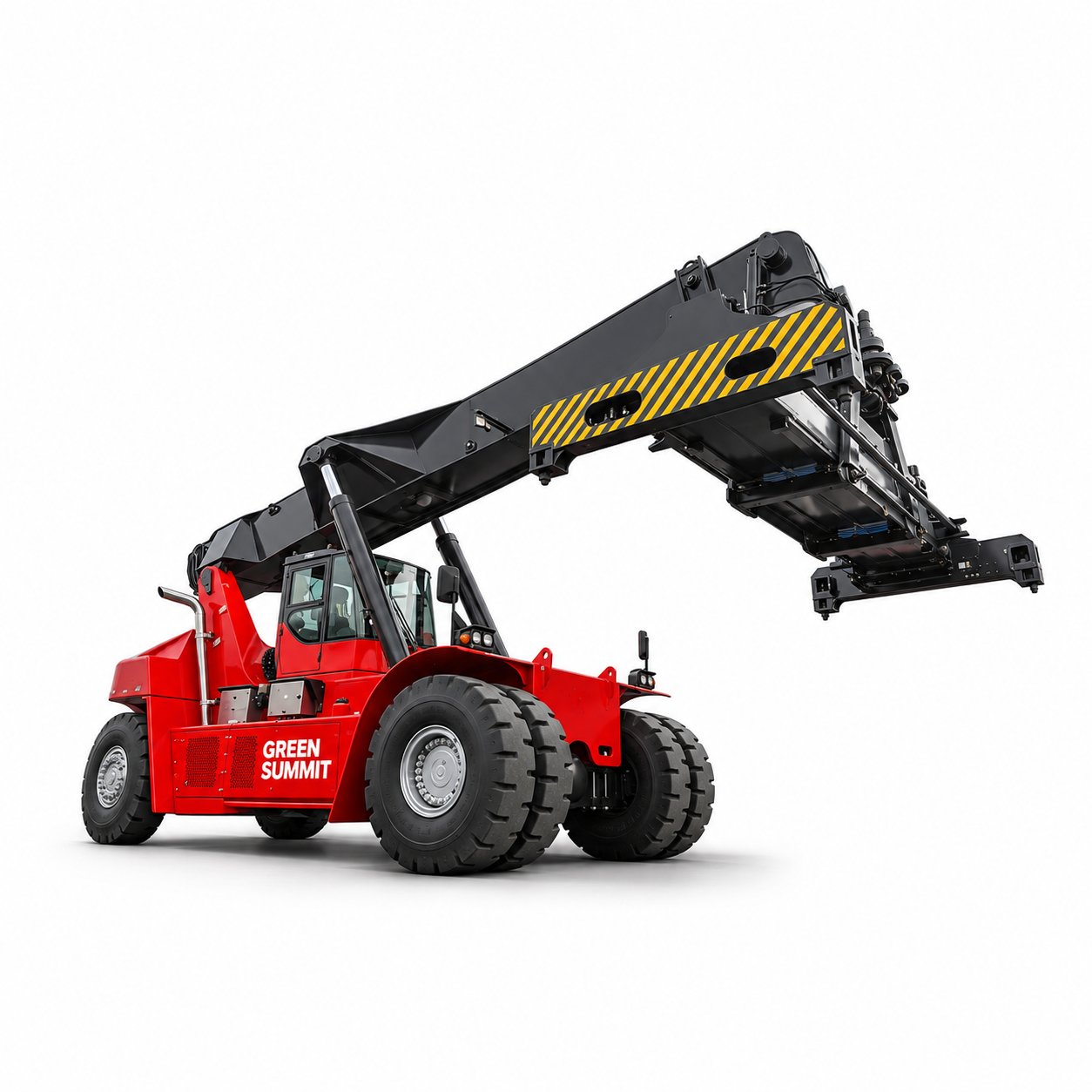
At high tonnage, stability margins are not abstractions — a 30-ton forklift that tips is a structural event, not an incident report. Stevedoring safety starts with honest capacity figures at the actual cargo geometry, and continues with speed, surface and operator discipline that the forklift is configured to support.
Load center at heavy tonnage
The nameplate rating assumes a standard load center. Long crates, coil cores and eccentric machinery move the center of gravity outward, and the tipping moment grows with both weight and distance. At 20 tons, a half-meter load-center shift matters far more than at 2 tons. Every heavy forklift in our range ships with a capacity chart, and we will calculate derated capacity for your specific cargo before you order — see the 25-ton electric forklift as an example of a documented configuration.
Speed and surface are configuration, not training
- Factory-set speed limits in storage aisles and around quay edges remove the reliance on operator judgment alone.
- Tire and drive configuration matched to the yard surface — covered in our surface guide — keeps traction predictable under load.
- Hydraulic smoothness on heavy masts is engineered; ask for the lift and lower speed specification.
The document trail
Port safety files need capacity charts, derated ratings, maintenance schedules and inspection intervals — all in writing, all matching the forklift as built. Green Summit supplies the complete documentation set with export delivery. Send the cargo geometry that worries you most; the derated capacity answer comes back before the quote does.