
Port Yard Surfaces: Tires, Ground Pressure and Heavy Electric Forklifts
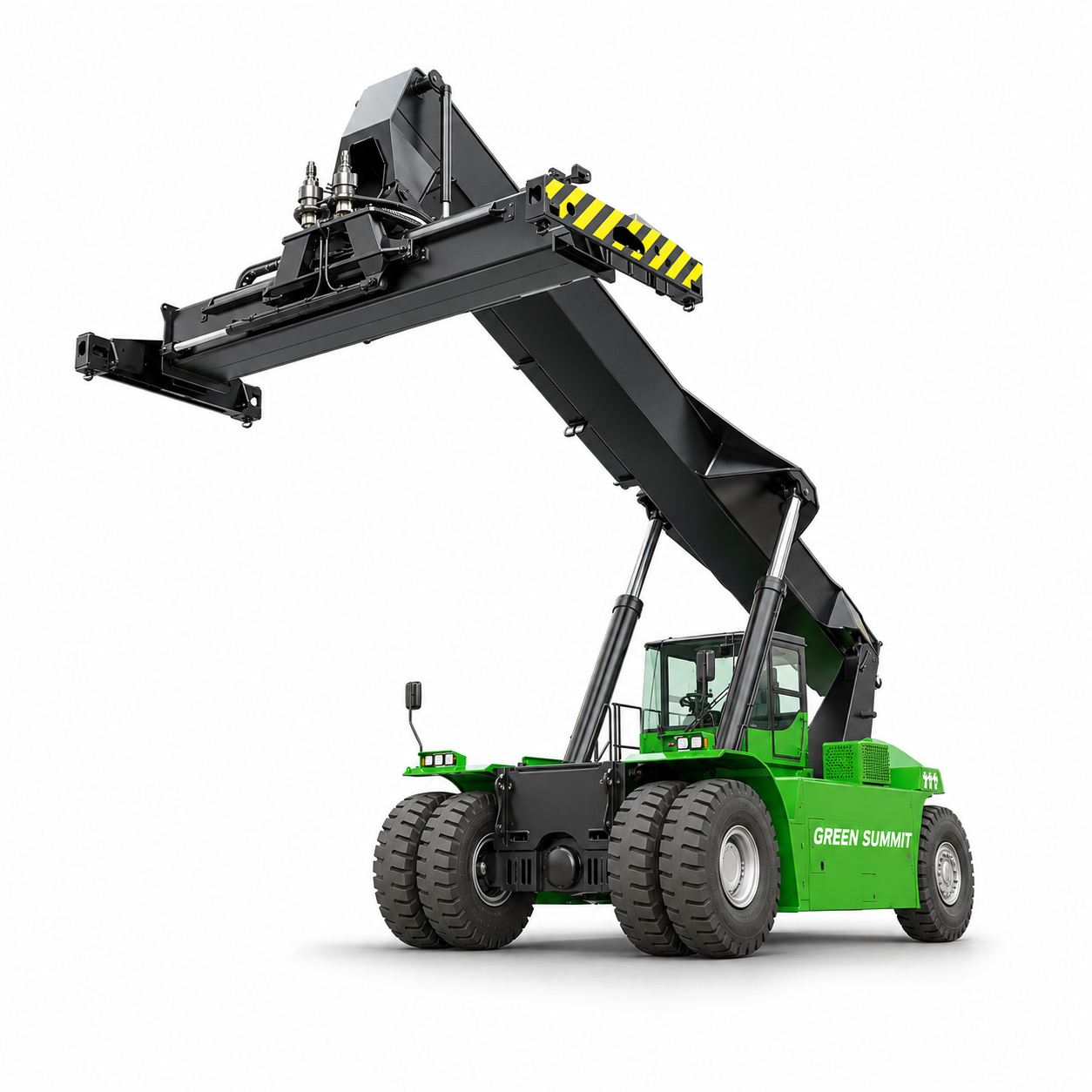
A 25-ton electric forklift is a heavy machine by any measure, and yard surface decides how well it works. Ground pressure, tire type and surface condition interact: the same forklift performs differently on new concrete, old asphalt and compacted aggregate. Surface assessment belongs in the specification conversation.
Ground pressure and tire footprint
Heavy electric forklifts concentrate load through four tires; pneumatic tires spread it, solid cushion tires concentrate it. Rough or soft yard sections need pneumatic configurations; smooth concrete aprons favor solid tires for stability and wear life. The choice should follow a surface survey — wheel paths, drainage, expansion joints and any areas that pump or rut under load.
What the surface survey captures
- Load-bearing sections versus known weak spots (old drainage lines, crane pads, buried services).
- Gradients the forklifts will work daily — ramps, bridge plates, yard slopes.
- Debris profile: dust, gravel, steel swarf — each points to different tire and protection choices.
Matching the forklift
Green Summit configures heavy electric forklifts — from the 15-ton to the 30-ton class — with tire type, ground clearance and drive configuration against the survey results. A forklift built for the surface you have costs less over five years than a surface rebuilt for the forklift you bought.
Send the yard surface description — sections, gradients, debris — and the tire and chassis configuration returns with the quote.