
Steel Coil and Project Cargo: Handling Heavy Metal with Electric Forklifts
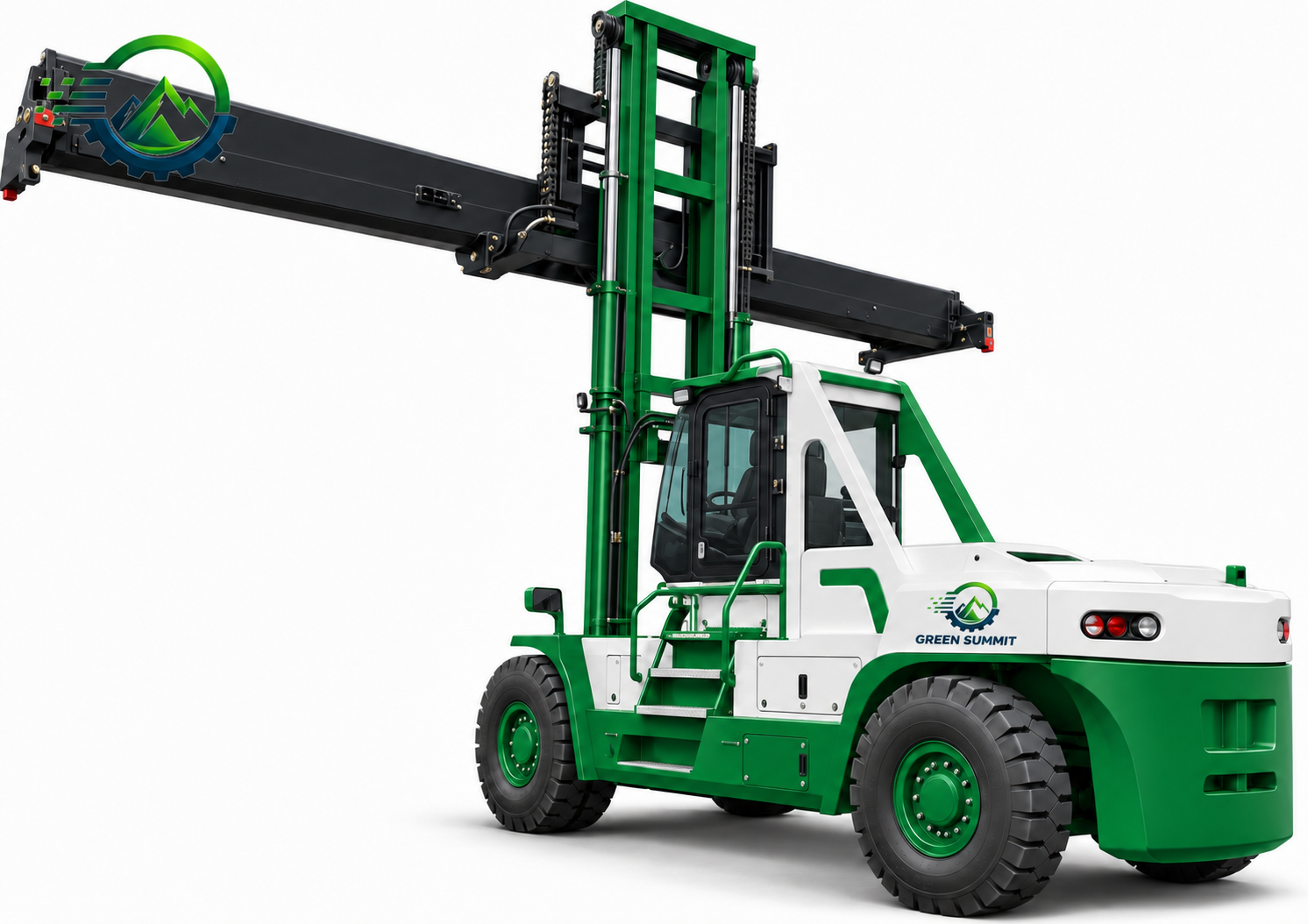
Steel coil and heavy plate are among the most demanding cargoes a forklift handles: concentrated mass, off-center geometry and unforgiving surfaces. Electric drive at high tonnage handles this work well — with the right attachment and an honest capacity calculation.
Why coil work needs the factory involved
A coil's center of gravity sits at its core, high off the fork face, and the mass concentrates over a small contact area. Standard forks scar the coil surface; a coil ram or properly designed fork configuration carries it without damage. Capacity must be calculated at the coil's actual geometry, not the nameplate load center. Green Summit builds coil-handling heavy electric forklifts — the 16-ton and 25-ton classes are common starting points — with the attachment and capacity chart supplied together.
Plate and long steel sections
Plates stack flat but slip; long sections want side-loading. Where plate dominates, specify fork slippers and side shift; where long sections dominate, a side-loader configuration from our long-materials range may serve better than a counterbalance. Many steel terminals run one of each.
The safety margin is engineered, not improvised
- Capacity at the actual load center, in writing, before the order.
- Speed limits in coil storage aisles configured at the factory.
- Tire and chassis specification for the steel-yard surface — see our yard surface guide.
Send the coil and plate dimensions — weights, diameters, stacking patterns — and we will return the attachment and capacity documentation.