
Operator Comfort in Cold Chain Work: Cab Specification and Shift Design
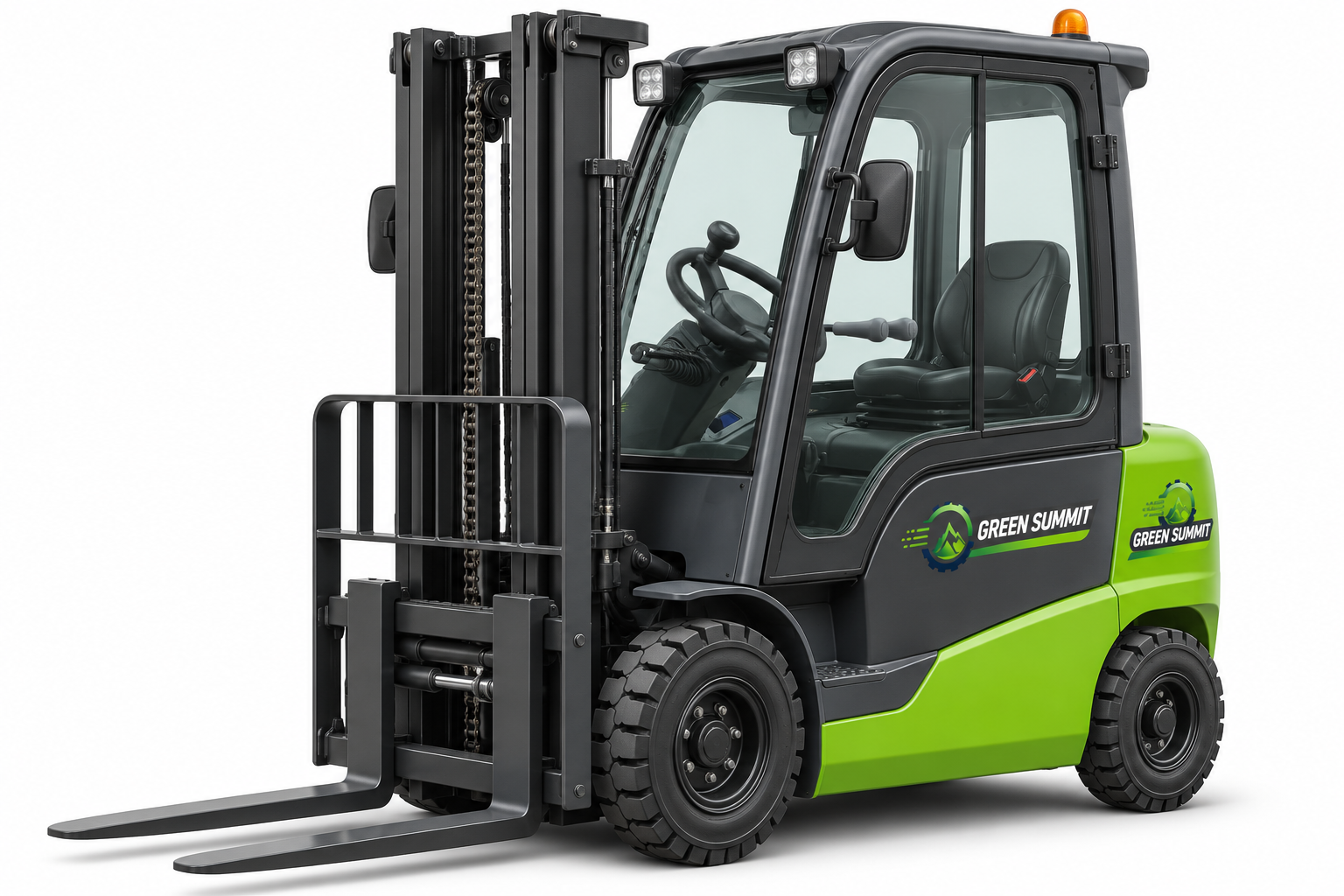
Operator retention is a supply chain problem disguised as an HR problem. Cold chain work is physically demanding, and the equipment specification directly affects whether trained operators stay through winter. Cab and comfort options are cheap compared with retraining a freezer crew every season.
What a cold-chain cab includes
For forklifts working deep-cold zones, the specification list includes full doors that seal against wind chill, heating sized for the setpoint, enclosed glazing that stays clear, and seat and control design usable with gloves. Green Summit builds cab-equipped forklifts such as the 1.8-ton electric forklift with cabin, with heating and sealing options specified against your coldest zone.
Heated cabs and battery budget
Cab heating draws energy, and in a cold zone battery capacity is already discounted. The honest way to handle this is duty math: runtime with heating on, at your setpoint, versus without. Ask the factory for both figures rather than discovering the difference mid-shift. Lithium opportunity charging recovers much of the cab-heating cost during breaks.
Shift design around the cold
- Rotate operators between cold and ambient zones rather than assigning full shifts inside the freezer.
- Stage frequently picked goods near the anteroom to cut deep-zone travel time.
- Keep the cab spec consistent across the fleet so operators move between forklifts without relearning.
Comfort specification is configured at order time together with the cold package — see our cold room guide for the full machine spec. Send your setpoints and shift lengths for a cab and battery proposal that adds up honestly.