
Electric Forklifts in Cold Rooms: What Actually Changes Below Zero
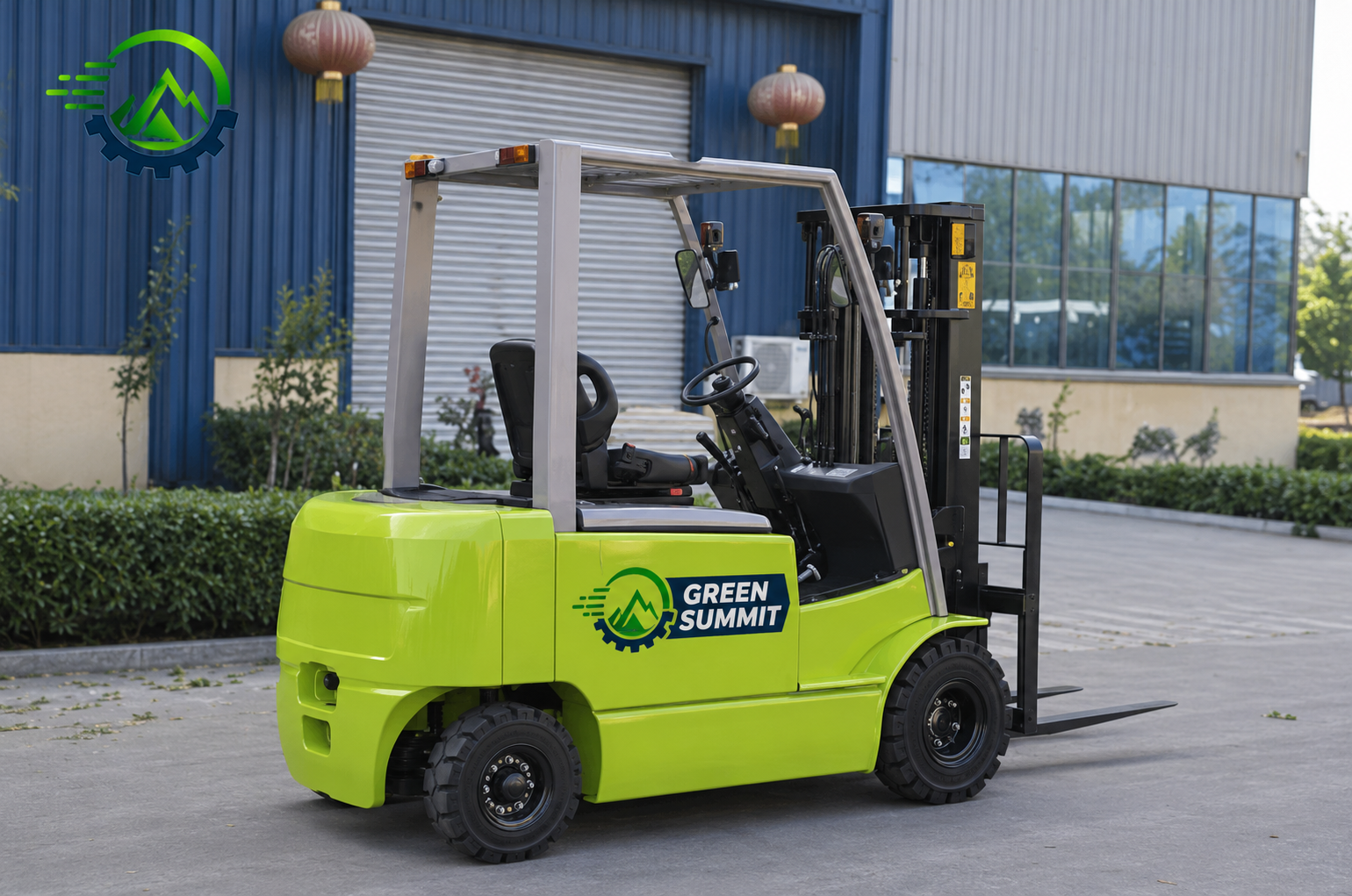
Below zero, an electric forklift stops being a warehouse forklift with a jacket on and becomes a thermally managed machine. Three things change: usable battery capacity, condensation on electronics, and the behavior of tires and hydraulics. Buyers who specify all three get forklifts that last; buyers who don't get downtime in the worst possible place — inside the freezer.
Battery capacity drops in deep cold
All battery chemistries deliver less usable energy at low temperature. In a freezer running -18°C or colder, plan for reduced effective runtime per charge and discuss battery heating or insulation options with the factory. Lithium systems with proper low-temperature management hold up better than unprotected packs; ask specifically how the pack is protected — this is a specification question, not a brochure question.
Condensation is the silent killer
A forklift that moves between a cold store and an ambient dock accumulates condensation on every cold surface, including controllers and connectors. Configuration answers include sealed electrics, careful connector selection and operating discipline — for example, letting electronics warm before heavy draw. Tell the factory how many times per shift your forklifts cross the thermal boundary; the answer changes the electrical specification.
Tires, seals and hydraulics at low temperature
- Standard tire compounds harden below zero and lose grip on icy floors — low-temperature compounds exist and should be specified.
- Hydraulic oil needs the correct low-temperature grade for the coldest zone, not the average one.
- Seals and hoses must be rated for the full temperature range the forklift will see.
Green Summit builds cold-store configurations as OEM/ODM orders — battery options, seals, tires and oil grades specified against your coldest zone. Send your temperature profile and dwell times and we will return the cold-chain configuration with capacity documentation.