
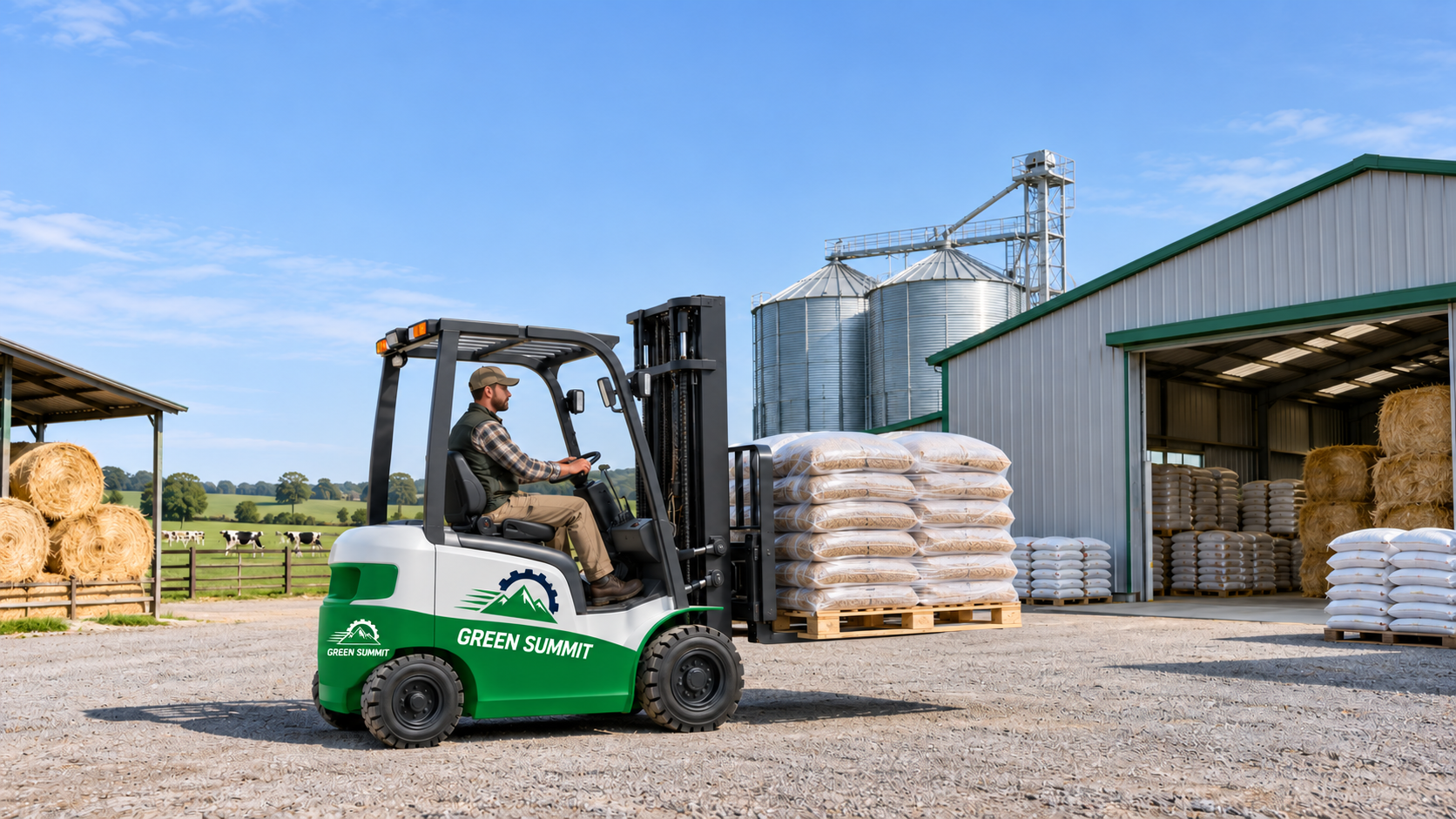
Electric Forklift for Agriculture
Application areas, the buyer challenges we solve, and a typical Green Summit cooperation story for electric forklifts in agriculture — feed, grain, greenhouse and livestock operations that need clean indoor air and dependable handling.
Where This Equipment Is Used
Where electric forklifts work on the farm
Farms and agri-supply operations move heavy, dusty, often wet loads every day — and the work happens both outdoors and inside barns, packing sheds and feed stores where diesel exhaust is no longer welcome.
- Feed, seed and fertilizer handling: bagged and palletized goods moved between delivery trucks, storage sheds and mixing areas.
- Grain and produce operations: palletized crates, sacks and boxed produce handled between field, packing shed and cold store.
- Greenhouse and nursery supply: substrate, pots and harvested goods moved indoors where fumes would damage crops and working conditions.
- Livestock and dairy farms: bedding, feed and equipment handled across yards and barn interiors on short, frequent trips.
Where the work stays outdoors on rough ground, our rough terrain line is the better match; for barns, sheds and packing houses, a compact electric counterbalance truck covers most daily moves.
The Problems We Solve for Buyers
The problems we solve for agricultural buyers
Farm buyers usually manage a fleet themselves, with no resident mechanic and a busy season that punishes downtime. The risks we settle before delivery are practical ones.
- Diesel exhaust inside barns and sheds: zero-emission electric power keeps the air usable for people, animals and produce in enclosed spaces.
- Fuel logistics in remote locations: charging replaces refueling trips; battery capacity is sized to the farm's real daily hours, not catalogue averages.
- Dust, moisture and uneven ground: tire type, ground clearance and protection options are selected for yard and barn-floor conditions by the factory engineering team.
- Seasonal peaks and spare parts: wear parts and filters can ship with the truck, and support stays with the same export team that handled the sale — critical when the season cannot wait.
Why the Customer Chose Green Summit
A typical cooperation story
A feed and grain supply operation was moving palletized bags between its delivery yard and an enclosed mixing shed with an old diesel truck. Staff complained about fumes in the shed, and the truck itself was unreliable during the busiest months.
Green Summit worked from the farm's own numbers: daily pallet counts, shed doorway widths, floor surfaces and the hours the truck actually ran each day. The Xiamen engineering team proposed an electric counterbalance truck with tires and clearance matched to the yard, and a battery sized for the real working day so charging could happen overnight without infrastructure changes. The Singapore sales company handled quotation, export packing and delivery to the farm's port.
The operation chose Green Summit because the proposal answered farm realities first: clean air inside the sheds, a battery matched to their day, and a factory that has built material handling equipment since 2010 standing behind the machine. When a second unit was needed the next season, the order went through the same contact without a new tender.
If your farm or agri-supply operation is planning the same switch, send us your typical loads, shed dimensions and daily hours — the configuration should start from those facts.