
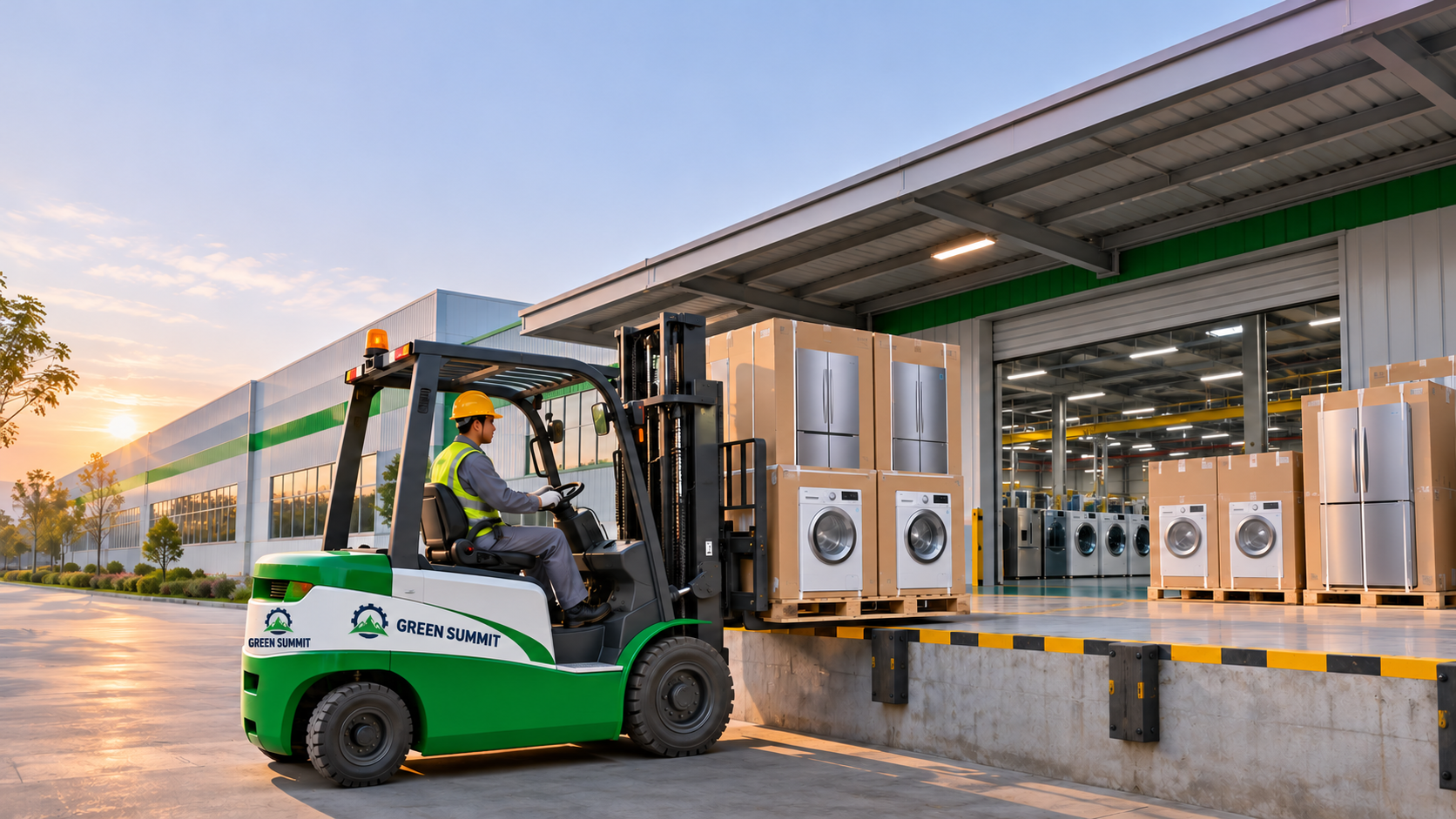
3.5-Ton Electric Forklift
Application areas, the buyer challenges we solve, and a typical Green Summit cooperation story for 3.5-ton electric forklifts — for appliance, paper and building-material plants that need heavier pallets moved indoors without diesel exhaust.
Where This Equipment Is Used
Where a 3.5-ton electric forklift works best
The 3.5-ton class covers buyers whose pallets grew heavier than a 3-ton truck allows, but who cannot accept diesel exhaust indoors.
- Appliance and electronics plants: cartoned washing machines, refrigerators and finished units moved from assembly to finished-goods and container loading.
- Paper, packaging and printing: heavy reel and palletized stock handled between press areas and warehousing in dust-sensitive environments.
- Building materials and hardware distribution: tile, sanitary ware and fastener pallets transferred in covered yards and indoor storage.
- Chemical and plastics handling: resin and drummed goods moved indoors where combustion trucks are restricted by safety rules.
The Problems We Solve for Buyers
Buyer challenges we solve
- Heavier loads without going diesel: reinforced mast and chassis options carry 3.5-ton pallets to the lift heights buyers actually need, verified against their rack drawings.
- Long shifts on one charge: battery capacity is sized from real duty-cycle data, not assumed averages, so the last shift ends without voltage alarms.
- Indoor-outdoor transitions: tire and chassis options handle dock plates, yard ramps and imperfect outdoor surfaces between warehouse and loading area.
- Total cost clarity: buyers receive a full ownership comparison — energy, maintenance, battery replacement — against their current diesel fleet before they commit.
Why the Customer Chose Green Summit
A typical cooperation story
A home-appliance manufacturer was stuffing finished washing machines into containers with a diesel truck, and both the workshop air and the loading schedule were suffering.
Green Summit reviewed the machine carton dimensions, pallet weights, rack heights and the distance between finished-goods storage and the loading dock. We configured a 3.5-ton electric truck with a mast matched to their tallest rack beam and a battery sized for the full loading window, so container stuffing no longer waited on battery swaps.
Before shipment, the buyer’s maintenance team completed remote commissioning training, and wear parts were pre-stocked locally. Six months later the fleet was expanded with the same specification — the clearest signal that the first configuration decision was right.