
Floor Load, Aisle Width and Tire Type: Warehouse Constraints Buyers Forget to Specify
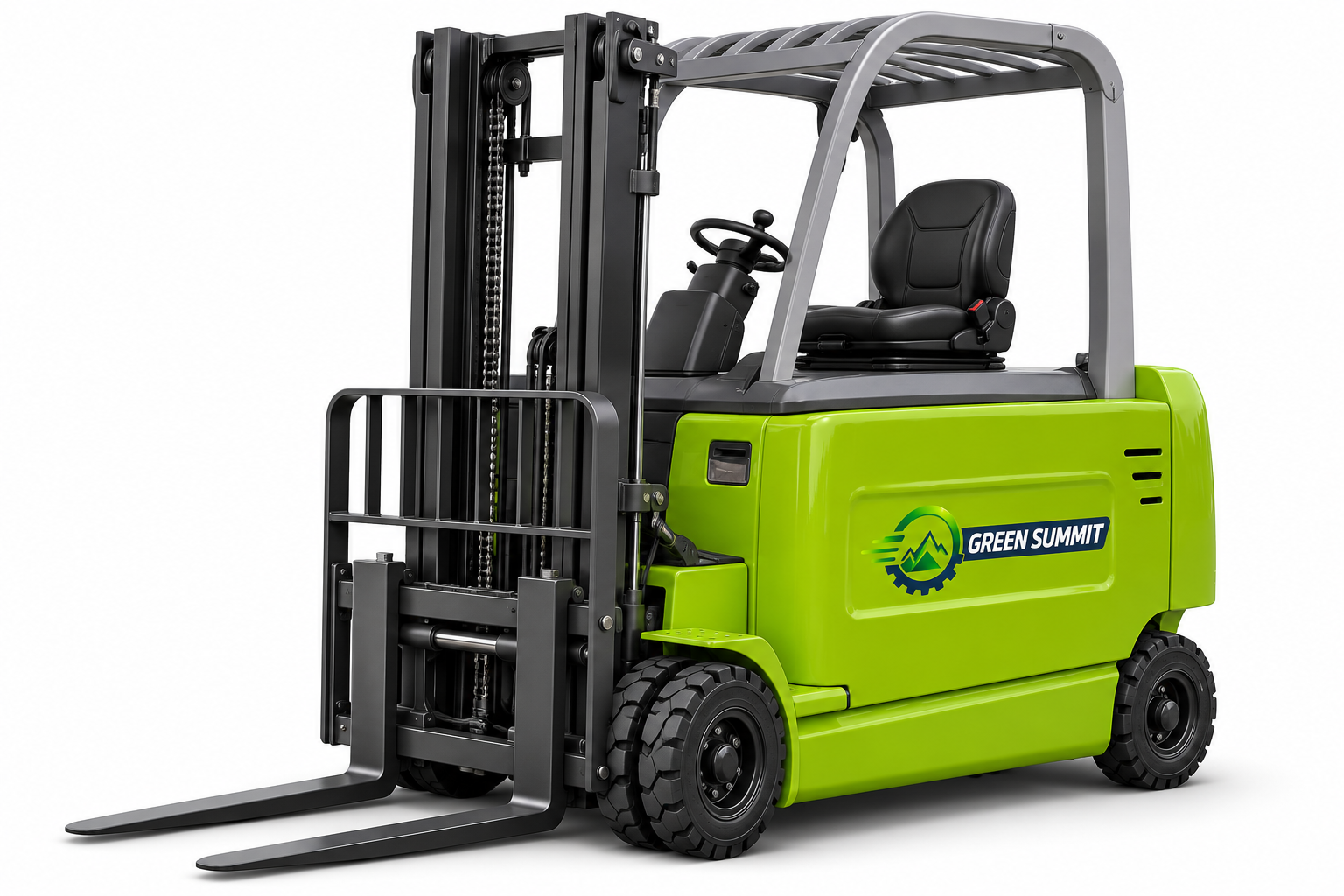
Three warehouse constraints get discovered after delivery more often than any specification error: floor load limits, actual aisle widths and tire selection. Each one is cheap to check before ordering and expensive to fix after.
Floor load and condition
Electric forklifts concentrate weight in a small footprint — a loaded 3-ton forklift plus battery can exceed what an old suspended slab tolerates, especially when the battery sits in the counterweight. Ask your facility manager for the slab's design load, and tell the factory your floor condition. Green Summit adjusts counterweight, battery placement and tire specification to the floor you actually have.
Measure aisles the way the forklift will use them
Measure aisle width between rack faces, not on a drawing. Compare against the forklift's turning aisle width at your pallet size — the published figure assumes a standard pallet and square right-angle turns. Narrower sites may need a VNA configuration; wider sites gain flexibility from a standard counterbalance like the 3-ton electric forklift.
Tires: the specification nobody requests until it squeals
- Smooth polyurethane suits clean indoor concrete and protects the floor.
- Pneumatic tires handle outdoor yards, ramps and debris — the 6-ton indoor/outdoor model is built for mixed surfaces.
- Tell the factory about ramps, dock plates and floor joints; tire and drive configuration follows.
These three checks take an afternoon. Send your floor, aisle and surface notes with your inquiry and the factory will match the forklift to the site instead of the site to the forklift.