
Narrow Aisle Storage: When a VNA Electric Forklift Makes Sense
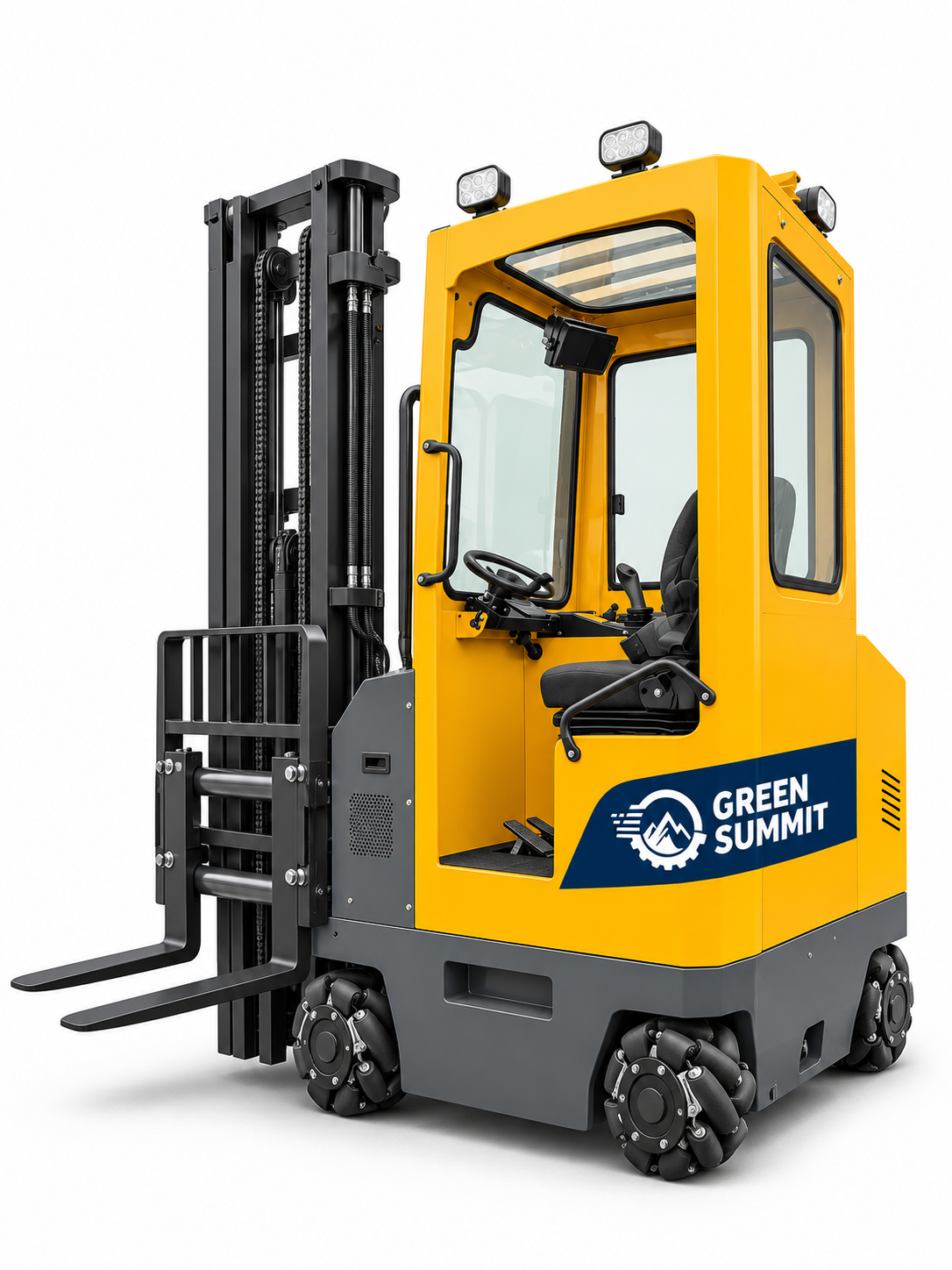
A very narrow aisle (VNA) forklift only pays off when your racking plan already commits to narrow aisles. Buying a VNA forklift for a conventional warehouse wastes its main advantage: maneuvering in aisles that standard counterbalance forklifts cannot work in. This guide explains when the investment makes sense.
What a VNA forklift changes
VNA forklifts such as our 3-ton VNA electric forklift are designed to stack pallets in aisles far narrower than a counterbalance forklift needs. That converts floor space into racking positions. The trade-off is that the forklift is built around aisle work, so it is less flexible for yard, dock and outdoor tasks.
When VNA makes sense
- Storage density is your bottleneck: you need more pallet positions from the same floor area.
- Aisle width is already planned below 2 meters in the new racking layout.
- Handling volume per aisle is steady enough to justify a dedicated forklift.
- Floor flatness and guidance can be prepared as part of the racking project.
When to stay with counterbalance
If your aisles are wider than 3 meters, a standard electric counterbalance forklift — for example the 3-ton electric forklift — usually handles both racking and dock work without a second forklift. Mixed fleets work better than forcing one forklift type into every task.
Green Summit manufactures VNA and counterbalance forklifts in the same factory, so we can review your aisle plan and racking heights before you commit. Send your racking layout and we will advise which configuration fits.