
How Many Forklifts Does a Cold Chain DC Need? Fleet Sizing at Low Temperature
Cold chain distribution centers run tight delivery windows, and forklift downtime inside a freezer is the most expensive downtime in the building. Sizing the forklift fleet for a refrigerated DC means planning around reduced battery performance, slow doors, and the fact that every task takes longer at low temperature.
Runtime math changes at low temperature
Start from duty hours as you would in an ambient warehouse — but then discount usable battery runtime for the cold zone. Deep-cold work delivers fewer effective forklift-hours per charge, so the same workload needs either more forklifts, more charging windows, or battery heating options that recover capacity. Green Summit sizes fleets from your duty data rather than a rule of thumb: send the daily forklift-hours per zone and we will model it.
Slow doors and dwell time
Every freezer door cycle is dead time, and forklifts queue at it. Layout changes — anterooms, dedicated cold-zone forklifts, staged pallet flows — often reduce the fleet size more effectively than adding forklifts. Map the queue before buying: a third forklift may cost less than re-routing, or the reverse. The measurement decides.
Fleet composition for refrigerated DCs
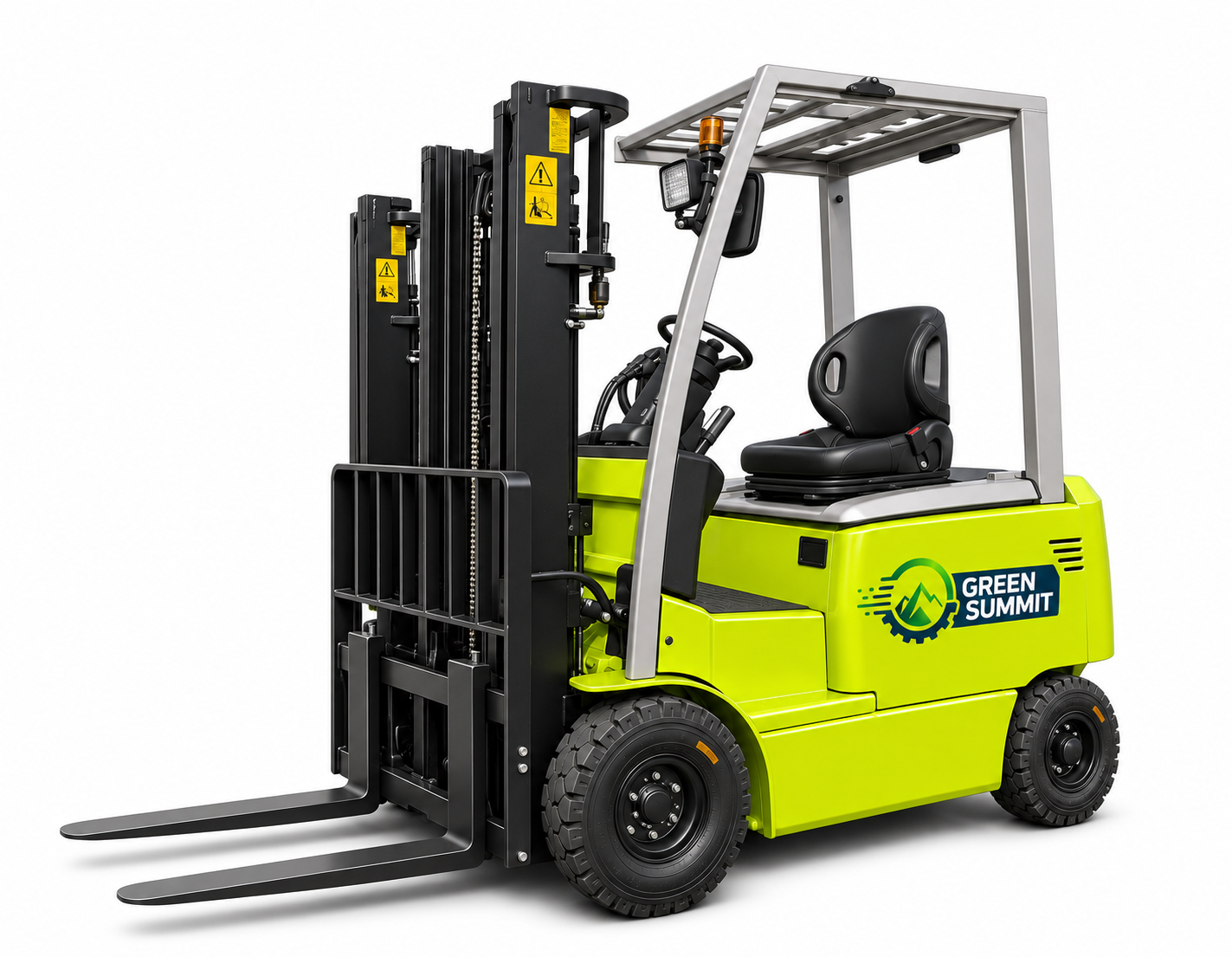
- Zone-dedicated compact forklifts for inside the store — the 2-ton lithium warehouse forklift is a common core.
- Ambient forklifts for docks and staging, kept outside the cold cycle.
- A spare ratio that reflects real maintenance windows, not optimism — freezer repairs take longer because everything takes longer.
Green Summit quotes refrigerated DC fleets as complete packages: forklifts, chargers, battery documentation and cold-zone specifications. Start with your delivery windows and we will work back to the fleet.