
Regenerative Braking on Electric Forklifts Explained
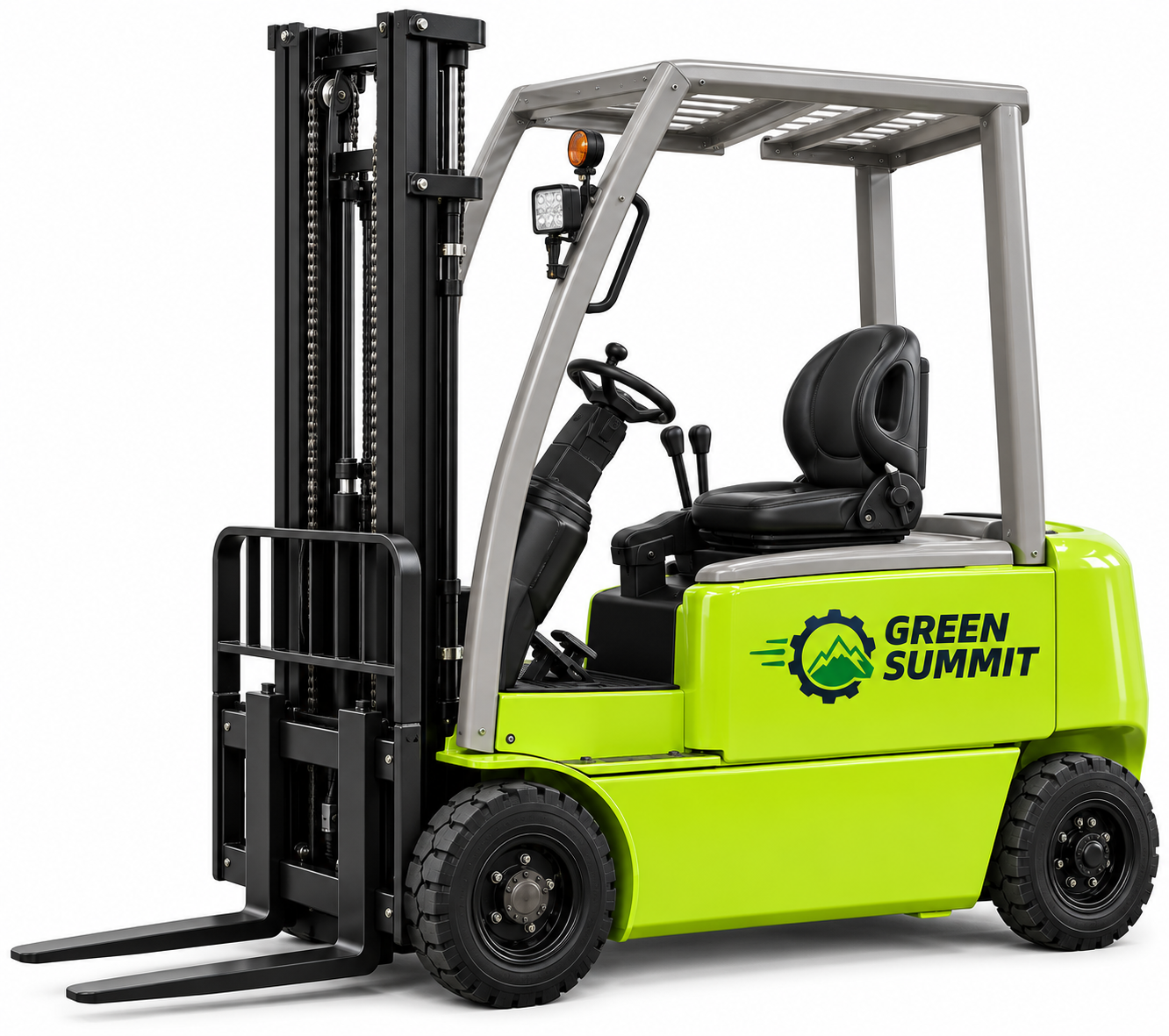
Regenerative braking appears on modern electric forklifts as a feature line, and buyers reasonably ask what it actually changes. The short answer: it converts some of the energy spent stopping and lowering back into battery charge, extending runtime modestly — and its real value depends on your duty cycle more than on the label.
How regeneration works
An electric drive motor doubles as a generator when the truck decelerates or travels downhill, feeding current back to the pack instead of burning it in brake friction. The same principle applies to mast lowering in some designs: the load's weight driving hydraulics downward can recover energy on the way down. A 3 ton electric counterbalance forklift in stop-start dock work regenerates often; one in long continuous travel regenerates less.
What it changes in practice
- Runtime: fleets typically see a few percent to a tenth more working time per charge depending on stop density — real, but not transformative.
- Brake wear: friction brakes work less, so pads and drums last longer, particularly on yard ramps.
- Smoothness: regenerative deceleration feels different from friction braking; drivers need a short adaptation period.
Where it matters most
Duty cycles with frequent stopping — order picking, dock shuttles, indoor aisle work — recover the most energy. Ramps add recovery on every descent. Long-haul yard work with few stops benefits mainly through brake wear reduction, not runtime.
How to evaluate it in a quotation
Ask two questions: what percentage of braking energy the system recovers under stated conditions, and whether mast lowering also regenerates. Then weigh the answer against your own duty cycle — a specification that sounds impressive on paper may matter little in your building, and a modest-sounding one may suit stop-start work perfectly.
One caution
Regeneration supplements braking; it does not replace parking brakes or the discipline of stopping for pedestrians. Train drivers that regenerative deceleration is not always sufficient on wet ramps.
Our electric forklift range includes regenerative drive options across lithium models. Compare the 2.5 ton electric forklift or the 1.5–4t series, and describe your duty cycle for an honest runtime projection.