
Reach Forklift or Counterbalance? Choosing the Right Forklift for Warehouse Racking
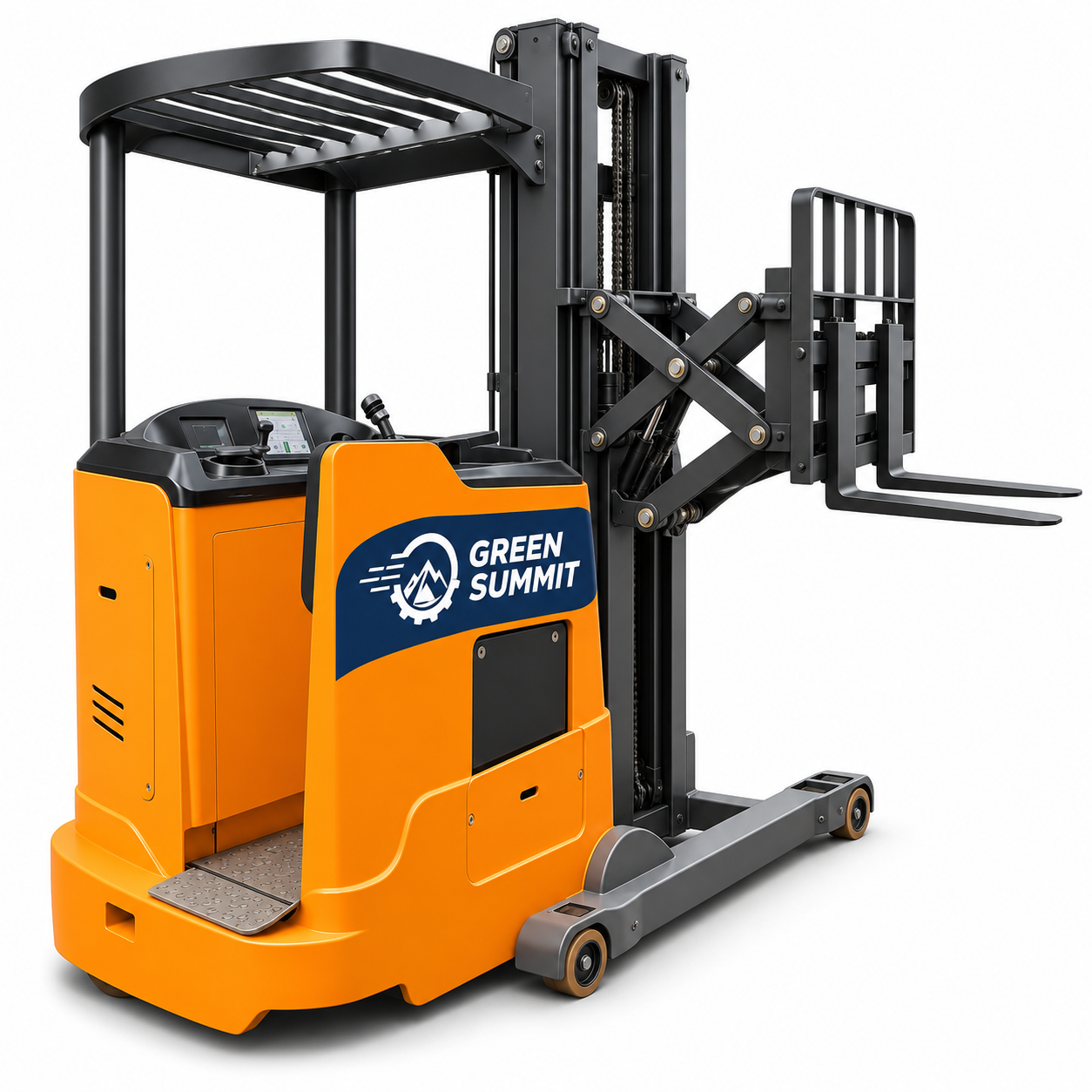
Reach forklifts and counterbalance forklifts overlap in load capacity but not in duty. Picking the wrong one for warehouse racking work costs either aisle width or lifting height. The distinction is mechanical: a counterbalance forklift carries the load ahead of its own weight; a reach forklift extends its mast and carriage forward while the chassis stays in the aisle.
Where counterbalance wins
Loading docks, yard work, trailers and open floor storage all favor counterbalance forklifts — they travel between zones, work ramps and need no racking-specific geometry. Models like the 3-ton electric forklift are the default when one forklift must cover several areas.
Where the reach forklift wins
Inside tall racking with planned aisles, a reach forklift stacks higher in a narrower aisle than a counterbalance of the same capacity. Its smaller turning profile converts rack footprint into positions, and lift heights beyond counterbalance masts are routine. See the 1.6-ton dual scissor reach forklift for a typical warehouse configuration.
The deciding questions
- Is the forklift's work mostly inside the racking, or moving between zones?
- How narrow are the aisles actually planned — and are they fixed?
- Does the top beam height exceed what a counterbalance mast can serve?
Many warehouses run one of each: counterbalance for docks and floor, reach forklift for the rack. Green Summit builds both in the same factory, so a paired fleet ships as one order with shared parts. Describe your racking and dock split and we will size the pair.