
Port Shift Patterns: Battery and Charging Strategy for Heavy Electric Fleets
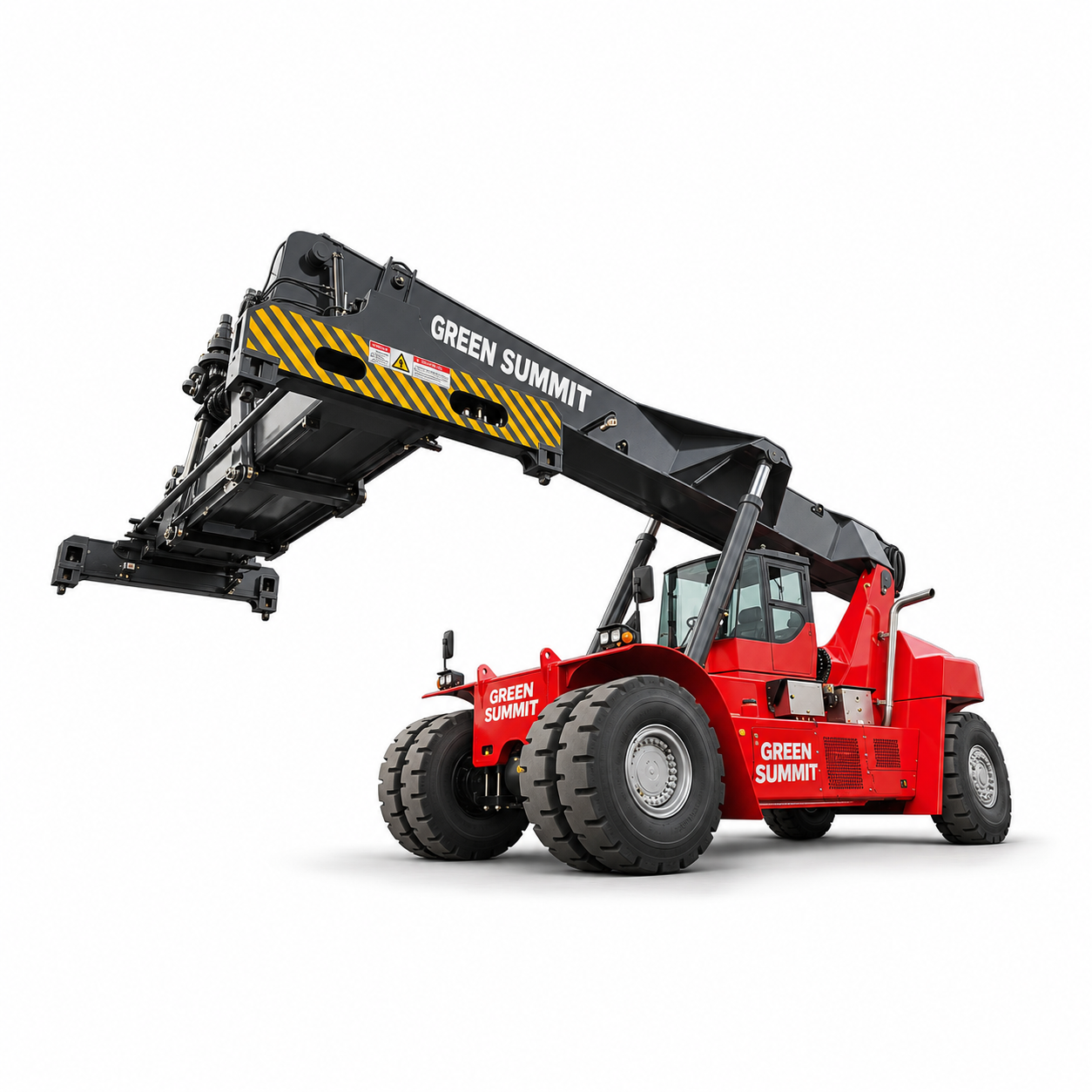
Heavy electric forklifts work long shifts with serious battery packs, and port operations rarely stop between shifts. The charging strategy has to fit the operation's rhythm — which means it is designed against the duty schedule, not bolted on afterward.
Duty hours decide the battery architecture
Add up the daily forklift-hours per shift, then check what each charge cycle delivers at that tonnage. Heavy classes run big packs; whether one pack per forklift suffices, or a rotation is needed, follows from the math. Green Summit models this from the duty data — send the shift schedule and the battery plan comes back with the forklift quote.
Charging windows in port rhythm
- Shift handovers: the natural charging window — place chargers at the handover points.
- Vessel gaps: between berths, forklifts idle; opportunity charging converts idle time into range.
- Night lulls: scheduled overnight charging for the whole fleet with load management on the supply side.
Grid capacity is a terminal-level project
Charging several heavy forklifts simultaneously draws significant power. Involve the electrical contractor with the charger specifications early; Green Summit supplies the documentation so grid assessment, charger placement and forklift manufacturing run in parallel instead of sequentially.
For a worked example of shift planning principles, see our distribution center guide; the port version adds tonnage and berth rhythm. The result should be written down: charging schedule, charger locations and grid load per hour — part of the delivery package, not a site improvisation.