
How Many Batteries Does a Multi-Shift Warehouse Actually Need?
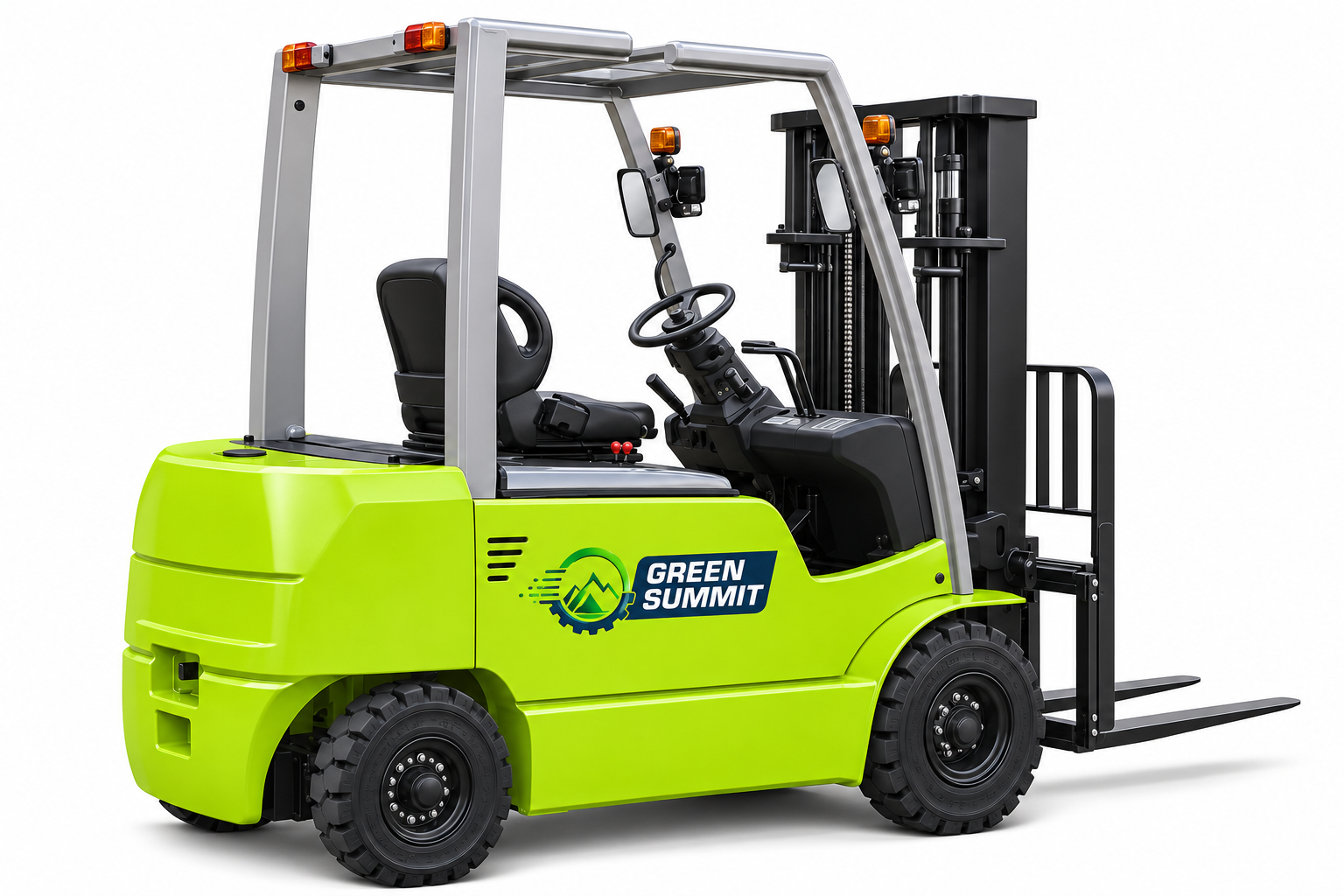
The battery room is the part of a lead-acid forklift operation buyers budget least and use most. For a multi-shift warehouse, battery rotation — how many spare packs each forklift needs and how they cycle through charging — decides both your battery spend and whether the second shift actually runs.
How rotation works
With lead-acid, a forklift that runs two shifts per day generally needs two to three packs in rotation: one on the forklift, one charging, one cooling. Charging plus cooling takes several hours, which is why the count grows with shifts. The exact number depends on your duty cycle — send Green Summit your daily runtime and we will size the rotation with the forklift order.
What the battery room needs
- Ventilated space with acid-resistant flooring and eye-wash provision.
- Chargers matched to pack voltage and amperage, not oversized for speed at the cost of pack life.
- Lifting equipment or a roller stand for safe pack changes.
- A watering and equalizing schedule that someone actually owns.
When lithium replaces the rotation
Lithium opportunity charging removes the spare-pack count: the forklift charges where it stands during breaks. For two-shift operations, the battery room itself may disappear, which is why many warehouse projects now order lithium from the start — see the 2-ton lithium warehouse forklift as a typical example.
Green Summit builds electric forklifts with both lithium and lead-acid configurations and exports the charging setup documentation with the forklift. Ask for the battery plan alongside the machine quote.