
Handling Frozen Goods: Load Stability and Forklift Specification in Freezers
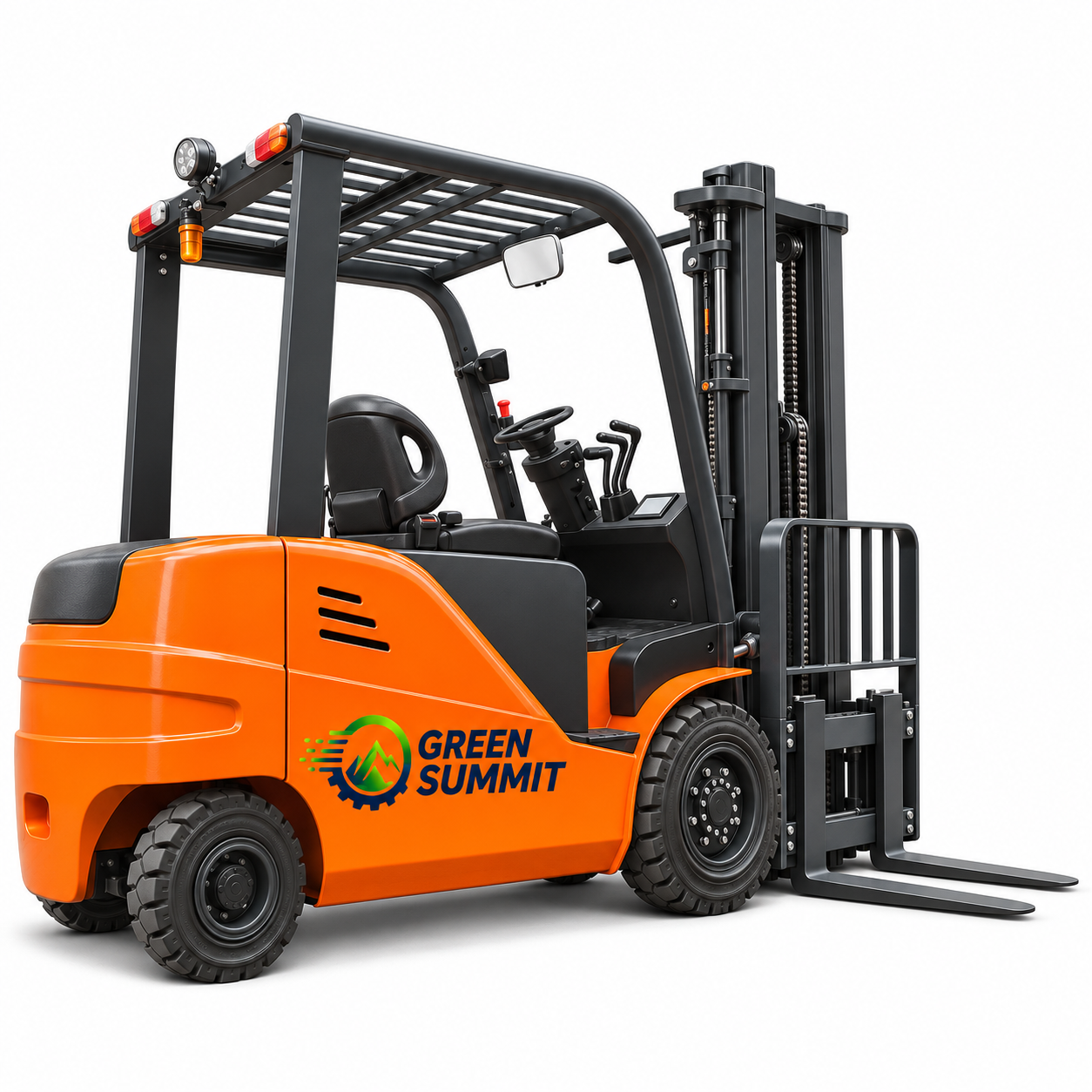
Frozen goods behave differently on the forks than ambient pallets. Shrink wrap stiffens and cracks, layers slip on frost films, and cartons crushed slightly at the dock shed their rigidity in the freezer. Load stability at low temperature is a handling question as much as a forklift question — and the forklift can be specified to help.
Why frozen loads slip
Frost and condensation films between layers reduce friction exactly where the pallet needs it. Wrap that was tight at ambient turns brittle below zero and loses its holding force. The result is layer shift during lift and travel — the load looks fine on the floor and moves on the mast.
Forklift-side answers
- Smooth, cold-rated forks with the correct toe length for your pallet type — short toes gouge frozen pallet boards.
- Gentle lift and lower speed settings for freezer aisles, configured at the factory rather than left to operator habit.
- Attachments where the load is not palletized: clamps for baled and carton goods, specified with re-checked capacity — see our attachment guide.
- Side shift for precise placement without repositioning in a narrow, cold aisle.
Load-side answers the supplier should flag
Freezer-grade wrap, slip sheets between slippery layers, and consistent pallet quality all raise stability — worth raising with your packaging supplier when forklifts are ordered. Green Summit documents fork, speed and attachment configurations for frozen-goods handling as part of the OEM/ODM quote. Describe your frozen load types and we will match the forklift specification.