
Load Center, Speed and Stability: Forklift Safety in Pallet Racking Areas
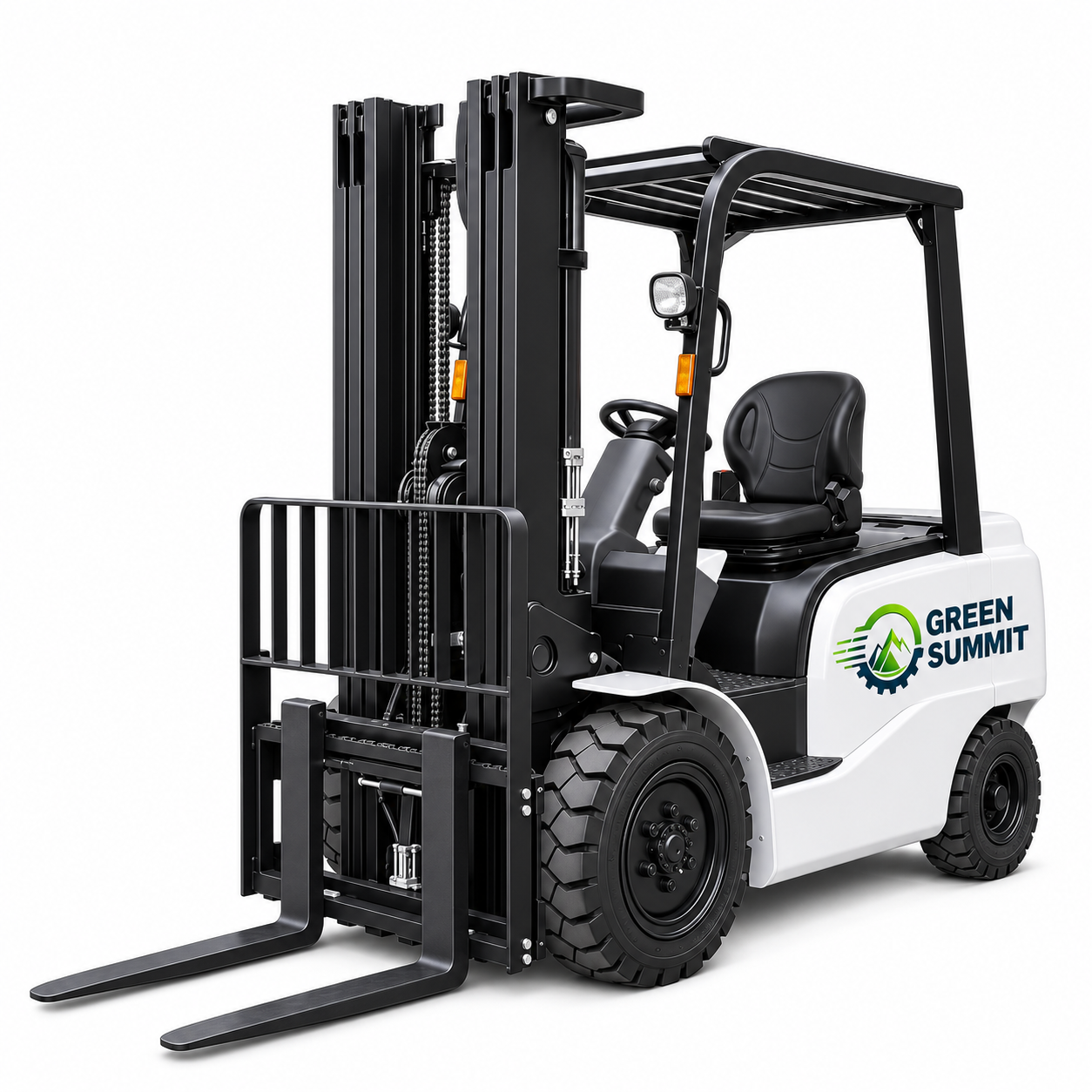
A round of pallet racking damage is usually an equipment specification problem, not an operator problem. Load center, stability and travel behavior interact: the same forklift driven safely with a short load becomes risky with a long one. Buyers who specify for their worst load — not their average one — see less racking damage over the forklift's life.
Load center is the physics that matters
A forklift's rating assumes a standard load center, commonly 500 mm. A pallet whose center of gravity sits further out multiplies the tipping moment even when the weight is the same. If your goods sit long or top-heavy — insulation boards, packed cartons on oversized pallets — specify the real load center and have the factory confirm capacity at it. Green Summit documents the capacity curve for the actual load, not just the nameplate figure.
Stability comes from configuration
- Counterweight and battery mass: lithium packs sit differently than lead-acid blocks, which changes the stability envelope.
- Tire and drive type: dual-drive configurations such as the 1.6-ton double drive forklift improve traction and control on ramps and smooth floors.
- Speed limitation settings for indoor aisles and pedestrian zones.
Practical rules for racking areas
Set the forklift's travel speed low in aisle zones, keep loads lowered while traveling, and train operators on the difference between the rated capacity and the derated capacity at height. The last figure is on the capacity chart — ask for it with the quote and post it in the cab.
For a forklift matched to your heaviest pallet at height, send Green Summit the load details and we will return the derated capacity in writing.