
Electric Forklifts for Container and Cargo Handling: Choosing the Tonnage Class
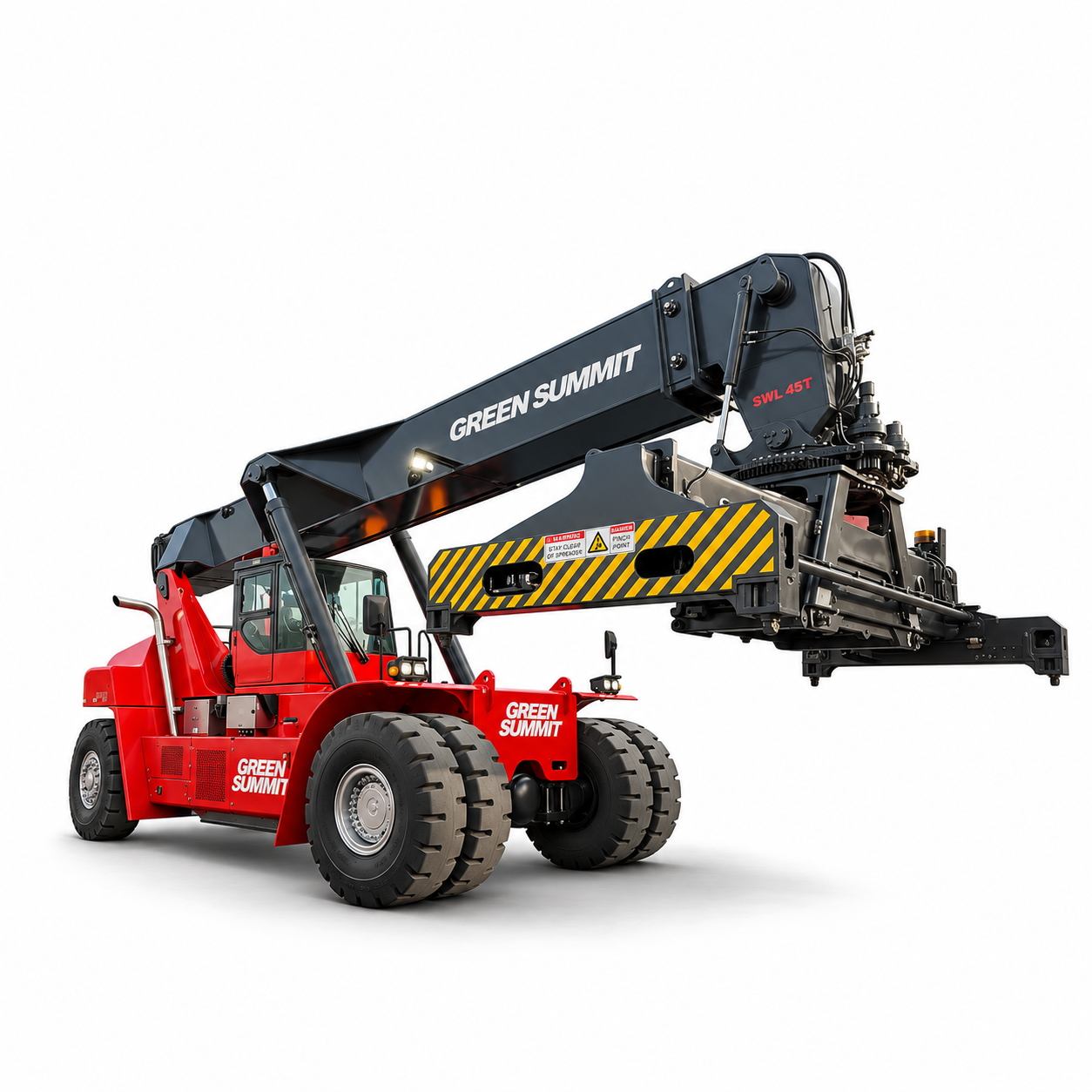
Container stuffing and destuffing, palletized breakbulk, and heavy crate handling are the bread-and-butter forklift duties of a terminal — and they sit in the 10–18 ton class far more often than buyers expect. Choosing within that class is a cargo-profile exercise.
Match the class to the cargo
- 10–12 tons: palletized breakbulk, bagged cargo, drummed goods — the 10-ton and 12-ton electric forklifts.
- 15–18 tons: steel plate and coil, heavy crates, machinery — the 15-ton, 16-ton and 18-ton models.
- 25–45 tons: project cargo, heavy steel sections, port logistics hubs moving concentrated mass — up to the 45-ton electric forklift.
Load center dominates at high tonnage
At heavy tonnage, load center differences move capacity fast. A 15-ton rating at a 900 mm load center is not a 15-ton capacity on a long coil crate. Send the factory the real cargo geometry — weight, center of gravity, fork entry — and require the capacity chart at that geometry. Green Summit documents derated capacity per configuration as standard practice.
Attachments carry the cargo profile
Coil rams, fork slippers, spreaders and custom carriages are factory-built options for heavy electric forklifts. An attachment specified with the forklift arrives with its own capacity documentation; a retrofit after delivery does not.
Every heavy model ships with export documentation, charger specification and the capacity charts your stevedoring safety file needs. Send the cargo profile for a class recommendation within one proposal.