
Electric Forklift Masts: Duplex, Triplex and Full-Free Lift
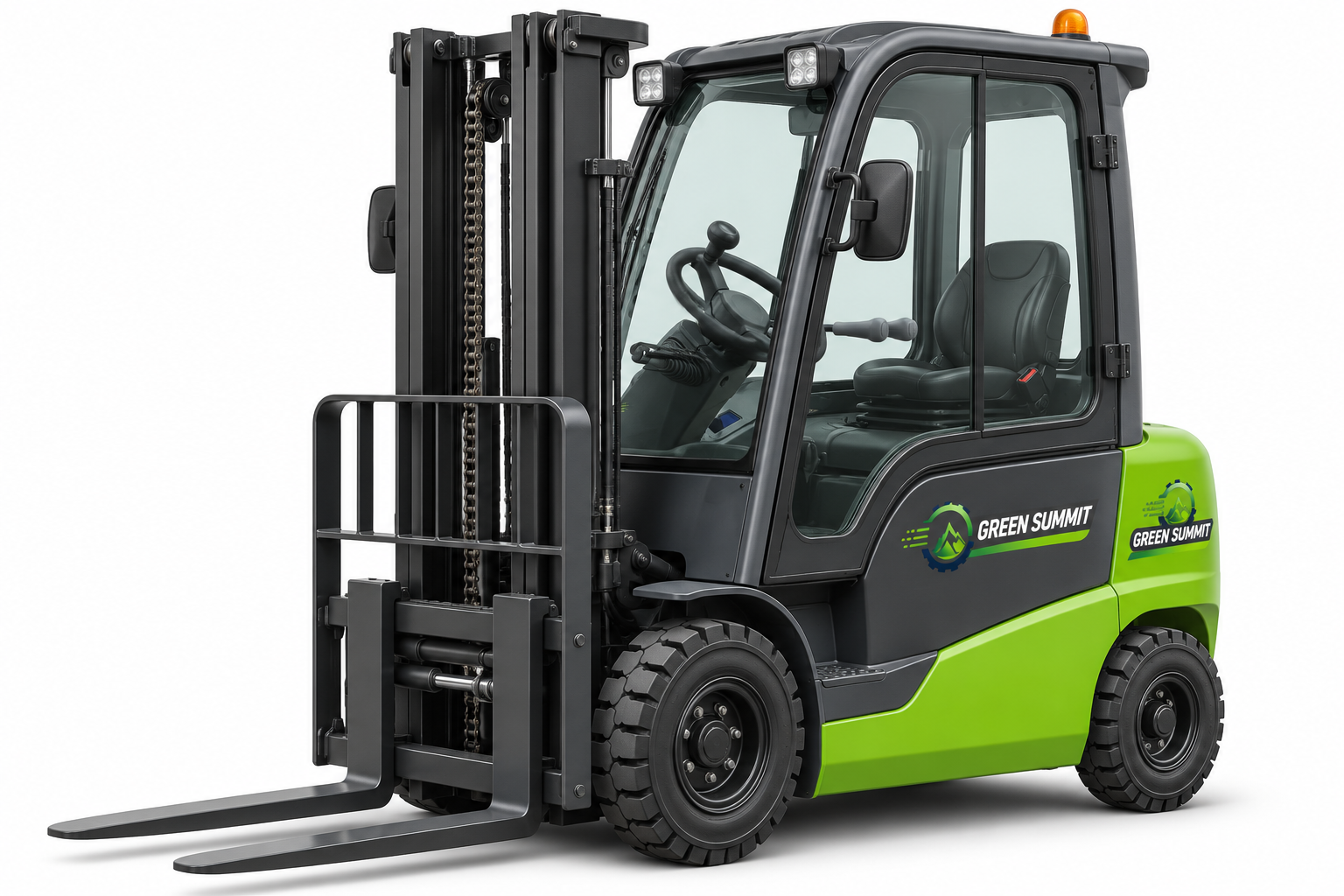
Mast choice shapes what an electric forklift can do in your building, yet many buyers leave it to the supplier. Understanding duplex, triplex and full-free lift masts lets you match the forklift to doorways, containers and racking instead of discovering the limits after delivery.
Duplex masts
A duplex (two-stage) mast offers good forward visibility and a simpler structure. It suits warehouses with higher doorways and moderate lift heights, and it keeps the truck's center of gravity low — helpful for a loaded 3 ton electric counterbalance forklift working fast on flat floors.
Triplex masts
Triplex (three-stage) masts reach greater heights with a shorter collapsed height. They are the standard choice when racking tops out at six meters or more but your doors are low. The trade-offs are reduced forward visibility and higher mast weight, which slightly affects residual capacity on a small electric forklift.
Full free lift explained
Free lift means the forks rise without the mast channels extending. With full free lift, a forklift can work inside a container or under a low mezzanine while still reaching high racking elsewhere. If containers are loaded or unloaded regularly, specify full free lift — without it, the truck cannot lift in confined spaces at all.
Matching mast to building
- Measure the lowest doorway, not the highest, before choosing collapsed mast height.
- Compare required lift height plus fork thickness plus a clearance margin against mast specs.
- For container work, confirm free lift and collapsed height in writing.
Confirming with the supplier
Ask for the mast's collapsed height, extended height and free lift figure for the exact model, because these differ across the range. A specification sheet with these three numbers lets you verify fit before ordering.
Our electric forklift range covers all three mast types across 1.5–72 tons. Browse the full electric forklift catalog or send your doorway and racking heights and we will match the mast configuration.