
Electric Forklift Mast Height: How to Match Lift Height to Your Racking
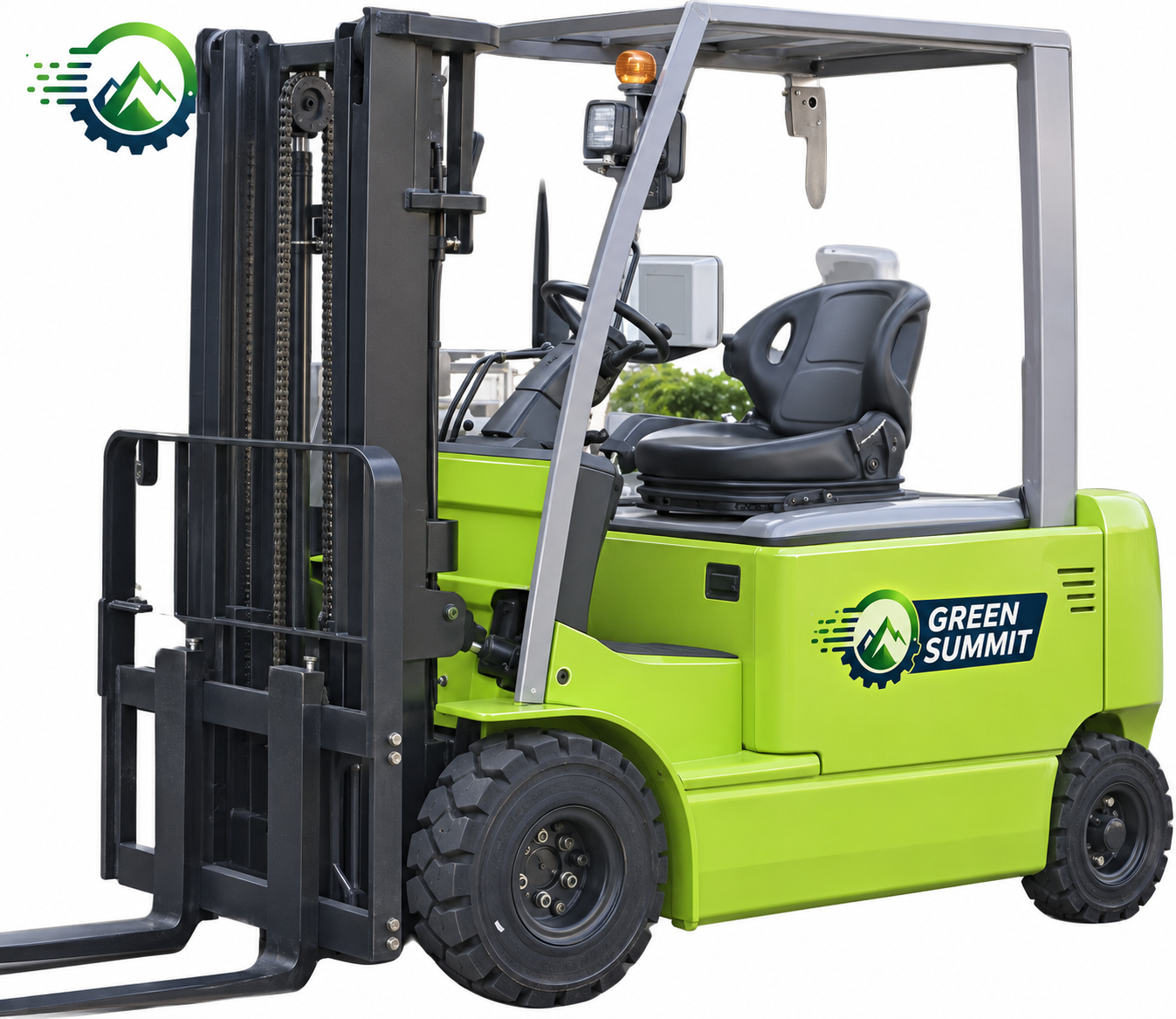
Mast height is where warehouse forklift specifications most often go wrong. Buyers order a standard mast, then discover the forklift cannot reach the top beam of their racking, or that free lift is too small to enter a low door. Both problems are avoidable with three measurements taken before you order.
Measure your top beam, not your pallet height
Maximum fork height must reach the top racking level with clearance for the load and the mast structure. Record the height of the topmost beam and the highest pallet position you service, then specify the mast so the forks clear that level. Mast options are part of Green Summit's OEM/ODM customization, so you order the height you need instead of adapting your building to a standard forklift.
Free lift matters in low rooms and containers
Free lift is how far the forks rise before the mast extends. In facilities with low doorways, mezzanine entrances or container work, insufficient free lift stops the forklift at the door with a raised load. Tell the factory the lowest overhead obstruction on your routes; the mast is specified around it.
Collapsed height and forklift height
- Compare mast collapsed height against every doorway and pipe run on the forklift's path.
- Include overhead guards, lights and mirrors in the height calculation.
- Remember that higher masts reduce residual capacity — request the capacity curve at full height.
Our 1.8-ton warehouse forklift and the 5-ton warehouse equipment model are both built to customer mast specifications. Send your rack heights and we will return a mast proposal with the matching capacity curve.